Reference-motion workflows can recreate the feel of a performance by combining source imagery with motion guidance. They appeal to creators who want to control movement, but usually involve more input preparation, experimentation and editing than a fixed duet template.
Product interfaces change quickly. This guide explains the durable workflow concepts rather than promising a particular button or free allowance; check Higgsfield’s current product pages for today’s features and terms.
What you will leave with
- Reference motion offers flexibility but raises source and editing requirements.
- A prepared two-photo scene is faster when the Hotel Lobby look itself is the goal.
- Compare usable output per attempt, not only headline credit price.
What a reference-motion route involves
A typical route combines character or face sources, a motion reference and generation settings. The result may then need compositing, audio alignment or several attempts to stabilize identity across both performers.
The benefit is creative range: you are not restricted to one scene. The cost is that every new reference introduces camera, body and occlusion variables.
When the simpler route wins
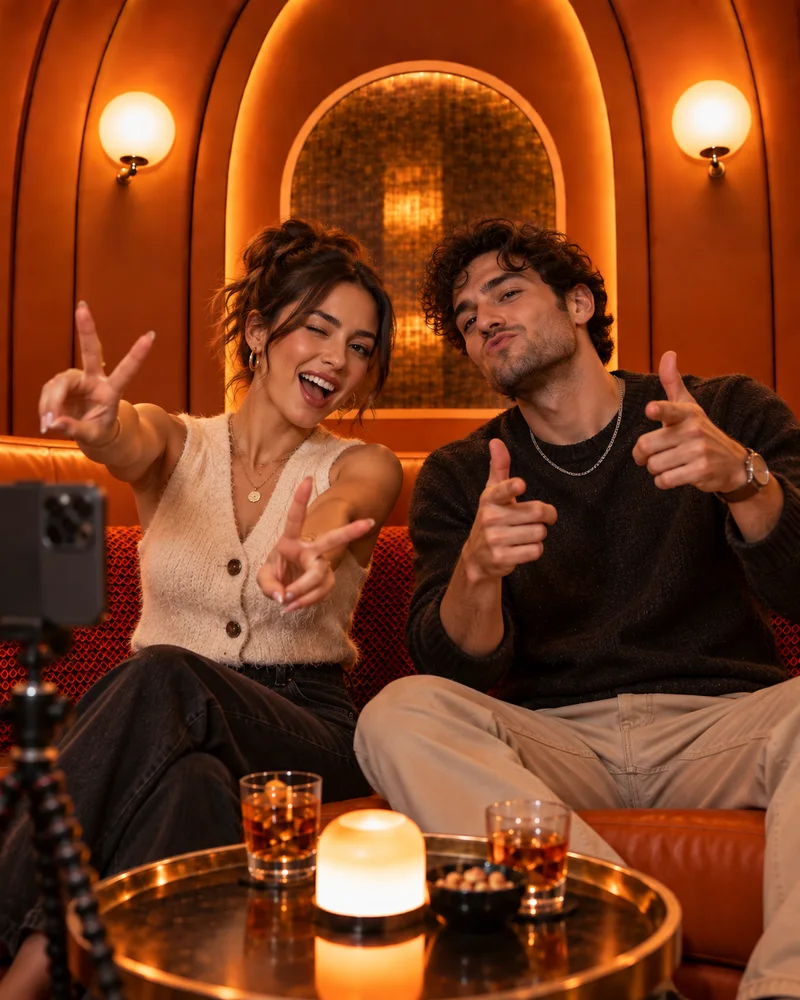
- You want the recognizable orange-booth duet rather than custom choreography.
- You have two portraits but no clean reference performance.
- You need a quick social clip, not a multiscene edit.
- You prefer selecting duration, aspect ratio and quality over tuning a complex prompt.
Run a fair side-by-side test
Use the same portraits, target length and destination format. Track setup minutes, render attempts, face consistency, cleanup minutes and export restrictions. This reveals whether extra control produces a better finished clip for your actual project.
If the fixed duet passes the creative brief, complexity is not automatically an upgrade. If movement is the brief, a reference workflow may justify the extra work.
Quick answers
Frequently asked questions
Is Higgsfield required for the Hotel Lobby trend?
No. It is one possible broader AI video workflow; a focused two-photo generator or an editing template can also produce a related format.
Why can reference motion need more retries?
The model must reconcile identity, body pose, camera movement and occlusion from multiple sources.
Ready to make yours?
Turn two photos into the orange-booth duet.
Upload one portrait for each performer, choose your output settings and review the credit total before generation.
Open Hotel Lobby AI